
Why We Stay Stuck on Smart
Three biases that cause leaders to sabotage their own performance and cultures.
If organizational health is the bigger advantage, and if the work isn’t complicated, why do so few leadership teams actually do it?
At The Table Group we point to three reasons. I’ve watched all three play out repeatedly, and what makes them stubborn is that none of them feels like a mistake while you’re making it. Each one feels like being good at your job.
1. We’re too smart for our own good
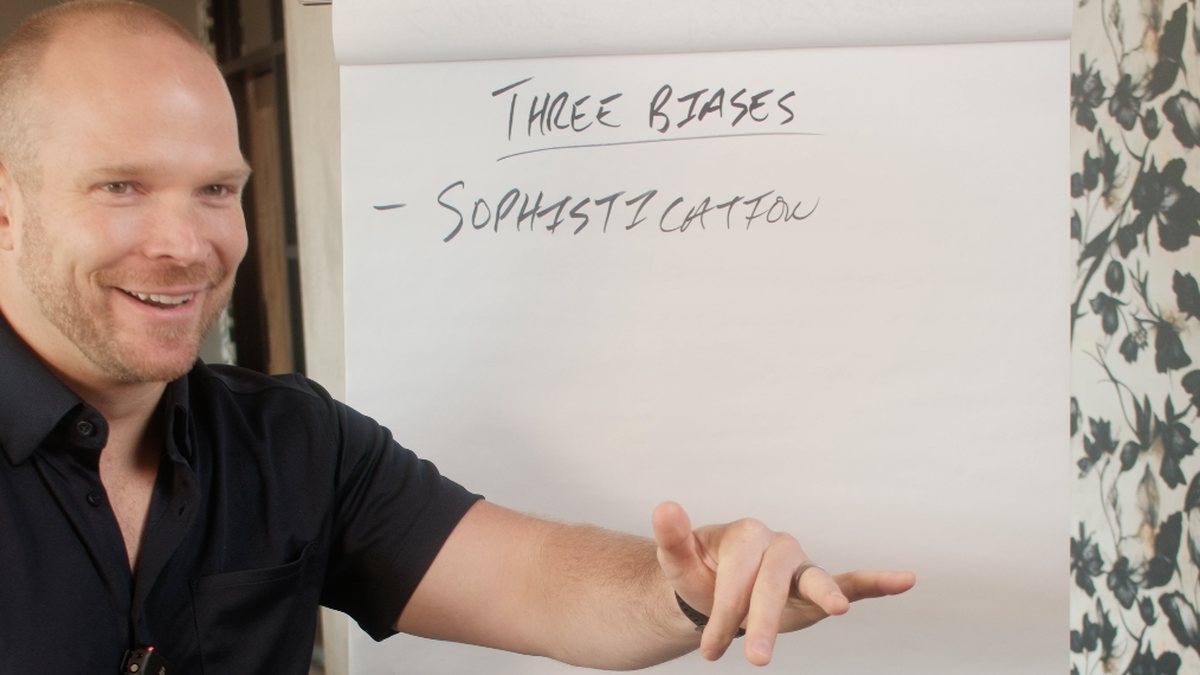
We call this the sophistication bias. It’s our tendency, when we hit a hard problem, to assume the solution has to be complicated.
The example I keep coming back to is silly but it lands. You walk into a public bathroom and there’s a sign telling you not to put things in the toilet that any adult already knows not to put in a toilet.
We do exactly this in organizations. Someone does something dumb, so we write a policy. We add a process, a procedure, a training. We’re trying to fix stupid.
But look at what’s actually happening. We don’t trust our people, and we’ve convinced ourselves that adding a process will let us trust them more.
It doesn’t build trust. It erodes it.
The alternative is harder, which is precisely why we avoid it. Building trust with your people is simple to describe and difficult to do. Writing a policy is difficult to describe and simple to do. We reliably pick the second one and call it rigor.
2. We’re too busy for our own good
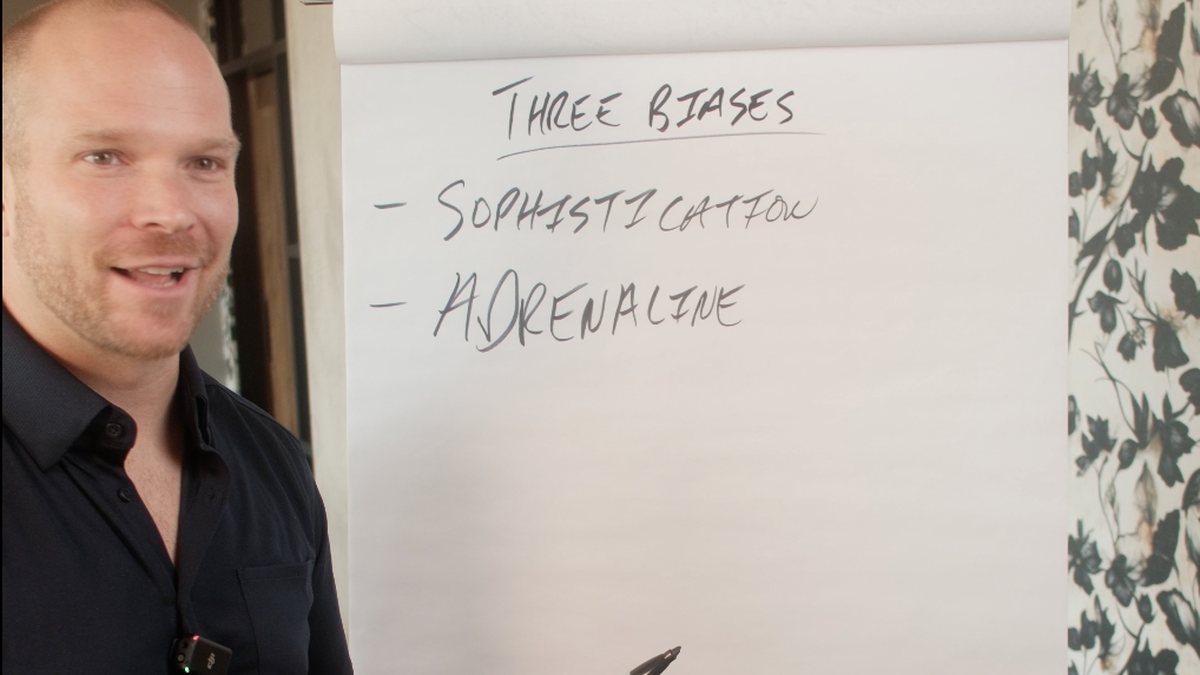
The adrenaline bias. This one is close to an American national trait, though I doubt we’re alone in it.
We let our calendars drive and dictate our lives. We carry a sense of urgency so constant that we become genuinely addicted to it — to the point that if we’re not going, going, going, we feel like we’re failing and letting people down.
But getting healthy requires slowing down.
I’m not a race car driver, but as I understand it, the way to take a turn fast is to slow down going into it. Organizations work the same way. If you want to move quickly, you have to be willing to decelerate at the corners.
Or, to quote a more reliable authority — Lightning McQueen. Slow is smooth, smooth is fast.
That’s what organizational health does for a company. It doesn’t feel fast while you’re doing it. It’s what makes everything afterward fast.
3. We can’t measure it, so we don’t trust it
The quantification bias. Our temptation to put a number on everything.
I think there’s fear underneath this one. How do I know I’m doing a good job? How do I know I’m making an impact? How do I know any of this matters?
Well — if I can attach a number to it, I’ll know. Revenue up. Margin improved. Expenses down. Customer contacts at some target. We generate an enormous quantity of numbers because numbers feel like proof.
Health resists that. It’s genuinely hard to measure, so it gets treated as genuinely less real.
But consider the same logic somewhere else in your life. How do you measure the love in your marriage? How do you know your marriage is healthy?
I’m sure some researcher somewhere has built an instrument for it. But honestly, you already know. You know when it’s healthy and when it isn’t, and no number is going to tell you something your instinct hasn’t already told you.
Organizations are the same. You know. You just don’t trust it, because you can’t put it in the deck.
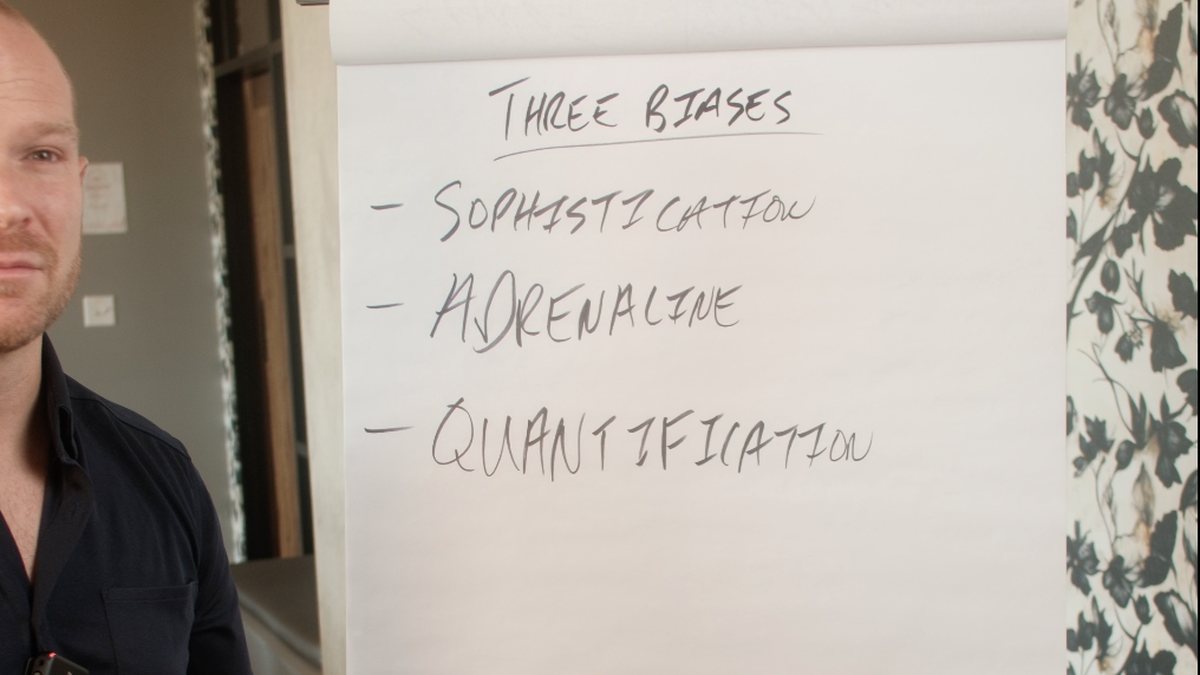
None of these three is stupidity. Each one is a strength slightly out of position — intelligence, drive, and rigor, all pointed at the wrong side of the ledger.
Which is what makes them hard to see in yourself. Nobody thinks I’m overcomplicating this to avoid a difficult conversation. It just feels like doing the work properly.

I help executives and their teams build clarity and cohesion, focusing on behaviors over systems.
Free Consulting CallMore concepts
The Four Types of Meetings
Meetings aren't bad. They're boring. That's a different problem, and it's fixable.
Read more →
The 4 Disciplines
How organizations get healthy — and the subtle traps that ruin it.
Read more →
Smart vs. Healthy
Organizations need two things to succeed. Most leaders spend 90% of their time on the first one.
Read more →