
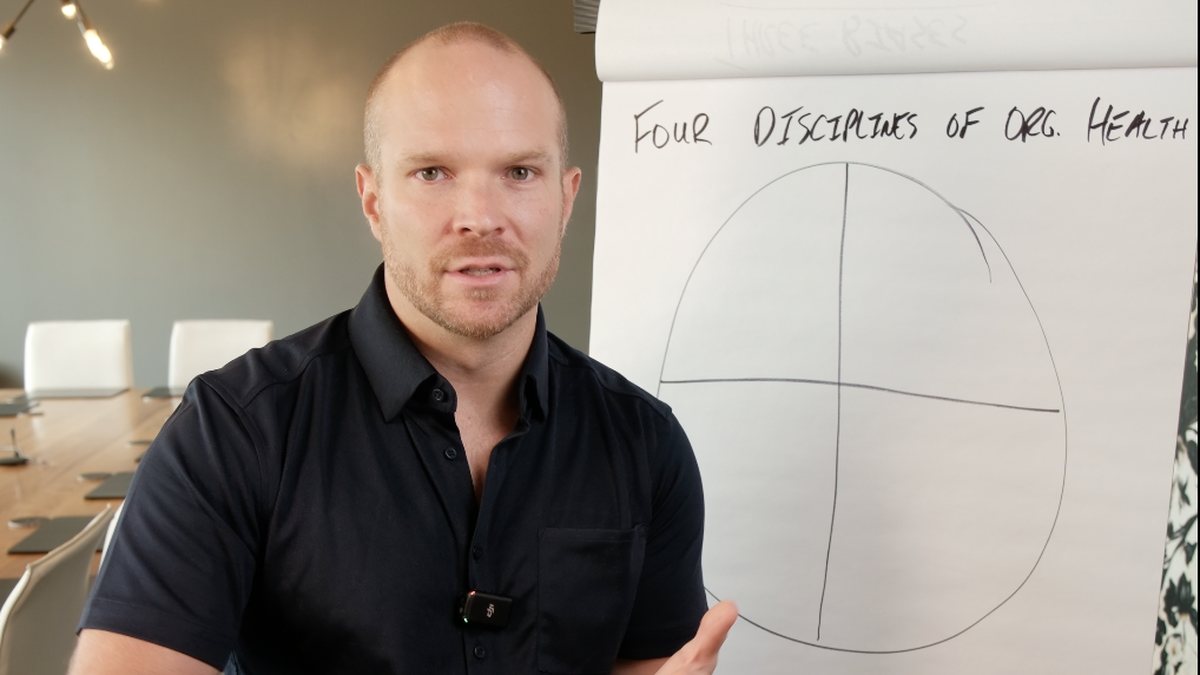
A healthy organization has minimal politics, minimal confusion, high productivity, high morale, and low turnover of its best people.
Clear enough as a description. It begs the obvious question: how do you get there?
Think about personal health for a second. Ask a doctor, or honestly just ask anyone on the street, and everybody knows the answer. Eat right. Sleep. Exercise. And these days most people would add something about mental health and relationships.
Nobody is confused about what makes a person healthy. Staying healthy is the hard part.
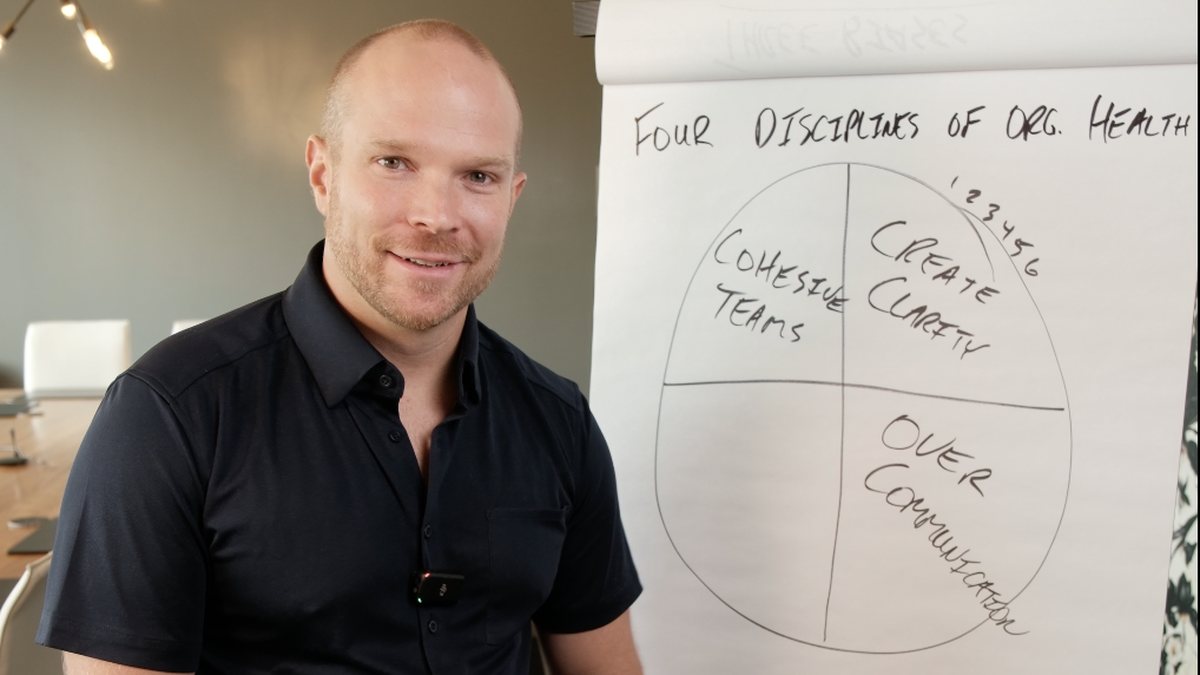
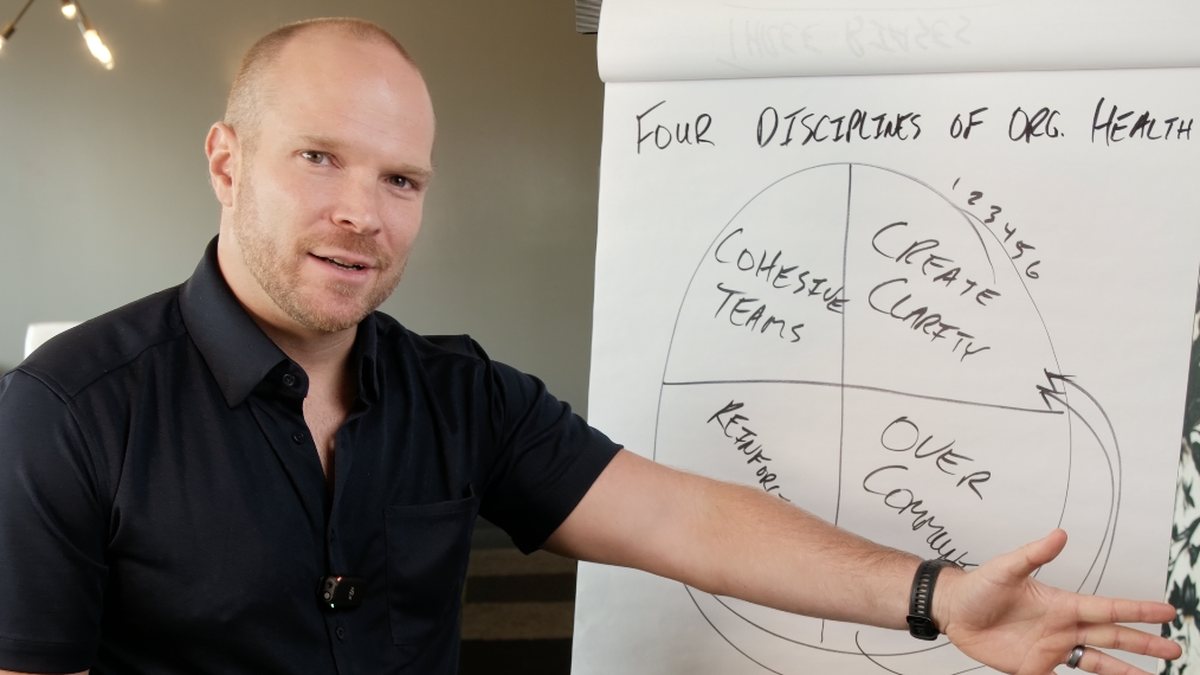
Organizations work the same way. There are four things they need, and frankly all of them are no-brainers.
1. Build a cohesive leadership team
The most important team in any organization is the one at the top.
And by team, I don’t mean a collection of people with a shared goal. That’s a working group — usually highly skilled, intelligent people who technically share an objective but don’t actually rely on each other to hit it. They’re off doing their own thing, hoping the collective effort adds up to a score. Working groups also tend to be large.
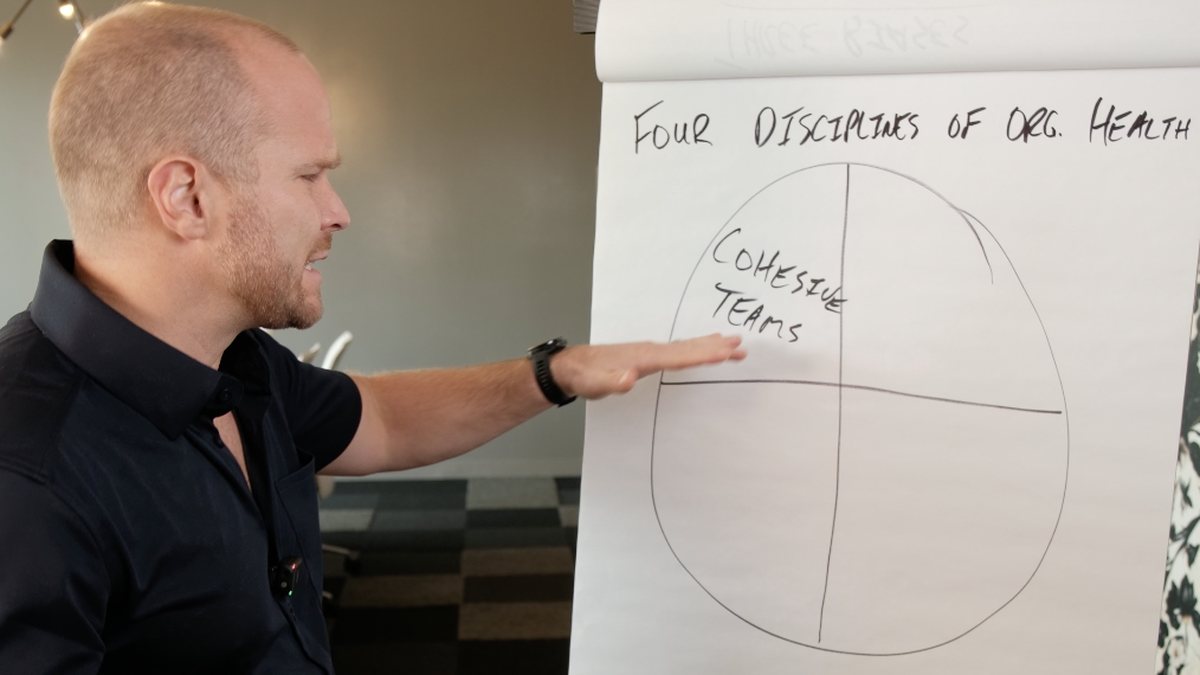
Real teams are close to the opposite. Small — usually three to eight people. Shared goal. And genuinely interdependent: without each other, they can’t get it done.
Cohesion is about how connected that small group actually feels. On a working group it’s easy to feel no real connection to anyone. On a cohesive team there’s a strong sense of belonging — to steal from Frozen, they can finish each other’s sandwiches.
The practical question is whether you’re spending enough time and energy staying behaviorally aligned. Are we trusting each other? Are we having productive conflict? Are we committed? Are we holding each other accountable when someone falls short?
And all of it exists in service of results, not warm feelings. What’s the premise of having a team at all? That together we can do more than we could separately. We create the space to do something none of us could do alone.
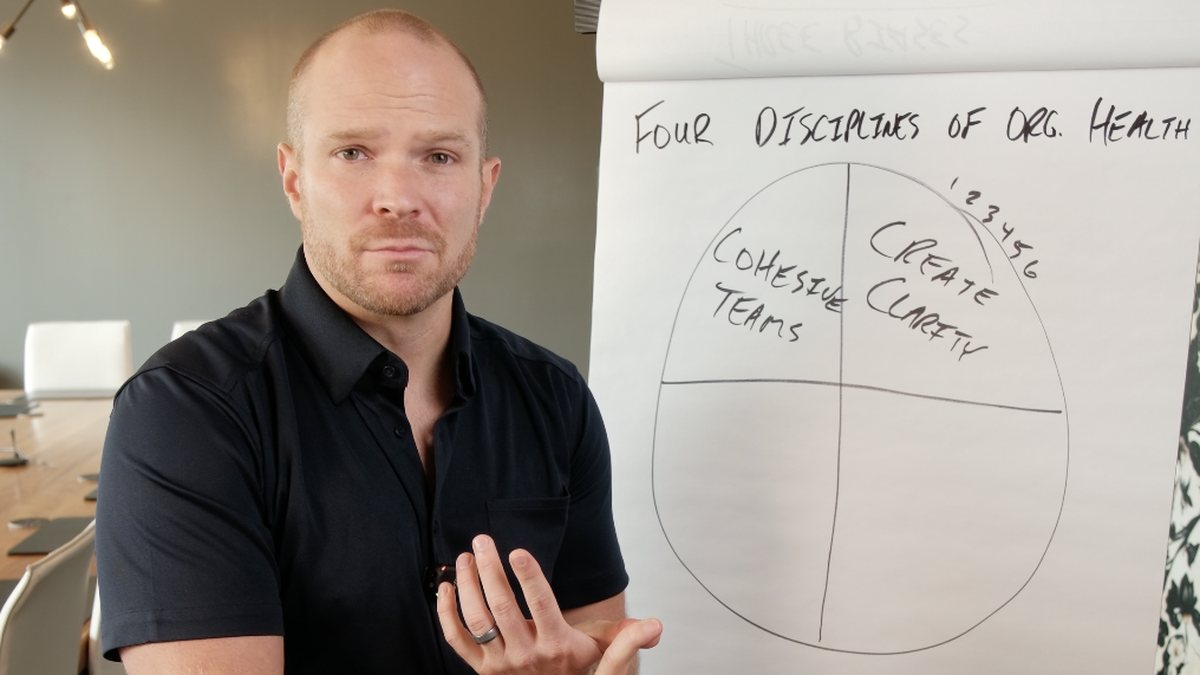
2. Create clarity
Six questions. Your leadership team needs to be genuinely aligned on all of them.
- Why do we exist? Our core purpose.
- How do we behave? The behaviors we actually want to see, the ones that set us apart.
- What do we do? Our business, described in the least sexy way possible. Plain and simple.
- How will we succeed? The real strategy for winning and differentiating operationally.
- What is most important right now? The single greatest priority. As Pat says constantly: if everything is important, then nothing is. Leaders have to give people one unifying direction on what actually matters.
- Who must do what? Not job titles. Given the people in the room and the skills they bring — lawyer, technologist, finance — who’s rolling up their sleeves to get this done?
3. Overcommunicate that clarity
Once you have it, you have to say it far more than feels reasonable.
We usually try to solve this with artifacts. Websites, t-shirts, plaques on the wall, screensavers. What actually matters is leaders talking about this stuff day in and day out — and not just talking. Demonstrating it in the decisions we make, in how we hold people accountable, in how we discuss what gets done and how.
I have six kids. The number of times I have to tell them not to hit each other, to be kind to one another, is exhausting.
Leaders feel that same exhaustion. How many times do I have to say this is how we behave around here? How many times do I have to explain what success looks like? They should have this by now. We get impatient and frustrated. I do it as a dad constantly.
The posture that works is recognizing that we don’t outgrow the thing our kids need. Adults are still human. We need good, strong reminders about how we behave and what’s expected.
Lead by reminding more than instructing.
Assume your people already know it and just need a kind, gentle reminder. That’s what greases the wheels and lets the thing build on itself.
4. Reinforce clarity
Put just enough process and structure in place to make sure the organization actually delivers on what you said mattered.
There are two ditches here.
Over-engineering is the common one, and it’s the sophistication bias showing up again. Twenty-page documents, enormous decks, training programs, policies. Most of it sits on a shelf unread, and what it does produce is red tape nobody wants to deal with.
No structure at all is the other ditch — crossing your fingers and hoping it works out. We need process. We need structure, technology and tools that help us work effectively. It just can’t hamstring us, and it has to drive clarity rather than obscure it.
Hiring and performance management are the two most critical systems to get right.
But here’s an example people rarely think of as a human system: financials. We create those. And a common, quiet mistake is setting budgets first and goals second. I’ve seen the cycle plenty of times — budgets in October and November, goals in January.
What happens is that come March, employees are trying to execute on the things you said mattered most, and there’s no money or resources allocated to do it. Flipping the order is a simple adjustment that makes clarity real.
The mistake almost everyone makes
It’s tempting to look at this as a business model. The number one mistake I see clients make is treating it as a to-do list. Step one, step two, step three, check it off, done.
Go back to personal health and look at the word again.
These are disciplines. You’re never done with them. There is no checking it off.
We use an assessment with teams that we grade internally as green, yellow, and red. The highest-performing teams we work with come back green across the board — and they’re still looking for how to get better. They don’t stop. They don’t ease off just because everything scored well. They know they’re human, and that if they take their eye off the ball, it comes apart.
The other side of it: I’ll have a client answer those six clarity questions, and three months later I’ll ask them to tell me their values. It’s genuinely awkward sometimes when they can’t — not because they didn’t mean it, but because they never brought it into the day-to-day.
So you almost have to become dogmatic about this. Maniacally focused, and clear that it’s never finished.
Which is hard. Exactly as hard as eating right and exercising. We all know it matters. Finding the rhythm that keeps it front and center is the actual work.
The healthiest leaders I work with are the ones who do that. And when they’ve got it — when it’s not just understood but genuinely at the front of how they operate every day — they don’t need me there anymore. That’s how I know they’re ready for me to move on.
Spirit, not letter
One more thing. Because this is easy to read as a task list, it’s worth saying plainly: what matters is the spirit of it, not the letter of the law.
We have particular tools we use with clients to deliver each of these. Sometimes our own tools get in the way, because a leader treats the tool as the thing to execute rather than the outcome to reach.
The questions worth asking are simpler than any tool. How do I know we’re actually connected? How do I know there’s genuinely clarity here — not just in the big six, but in the conversation we had this morning?

I help executives and their teams build clarity and cohesion, focusing on behaviors over systems.
Free Consulting CallMore concepts
The Four Types of Meetings
Meetings aren't bad. They're boring. That's a different problem, and it's fixable.
Read more →
Why We Stay Stuck on Smart
Three biases that cause leaders to sabotage their own performance and cultures.
Read more →
Smart vs. Healthy
Organizations need two things to succeed. Most leaders spend 90% of their time on the first one.
Read more →