
Smart vs. Healthy
Organizations need two things to succeed. Most leaders spend 90% of their time on the first one.
A lot of business leaders carry around the impression that they have to do it all. Figure it all out, master every piece of it.
I don’t think that’s true. At The Table Group, we believe there are really only two things an organization needs in order to be successful.
Before I get into them, one caveat: none of this is rocket science. That’s not false modesty. The simplicity is part of the point, and it’s also part of why this work gets skipped.
The first thing: be smart
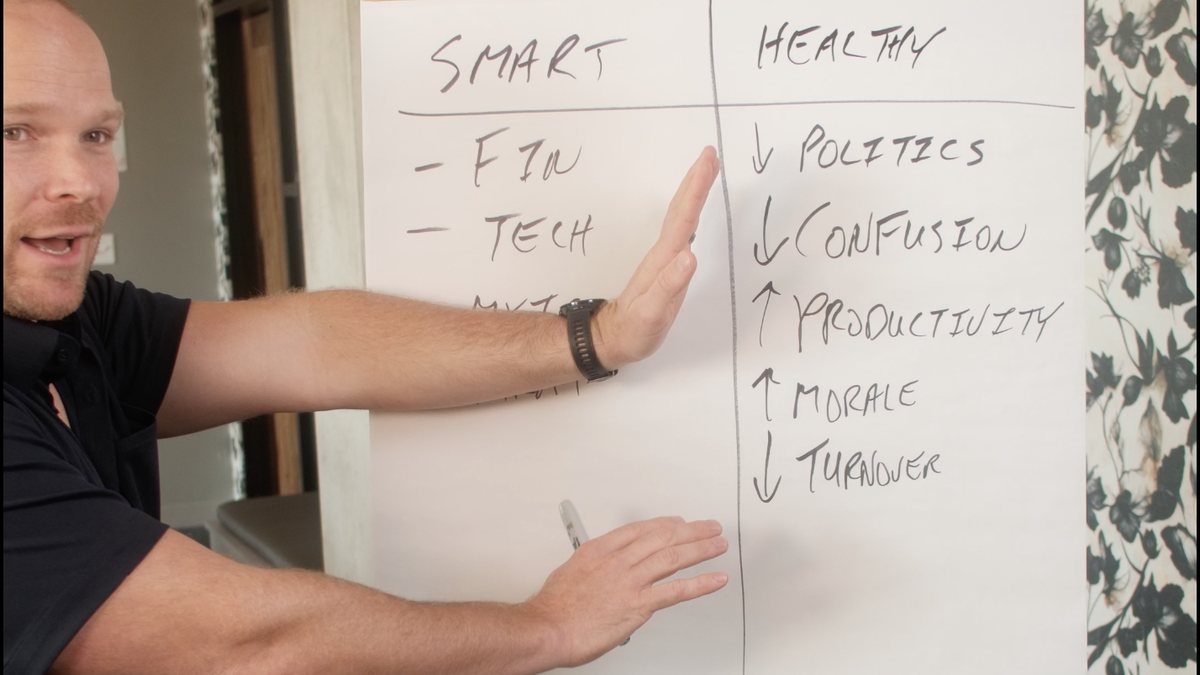
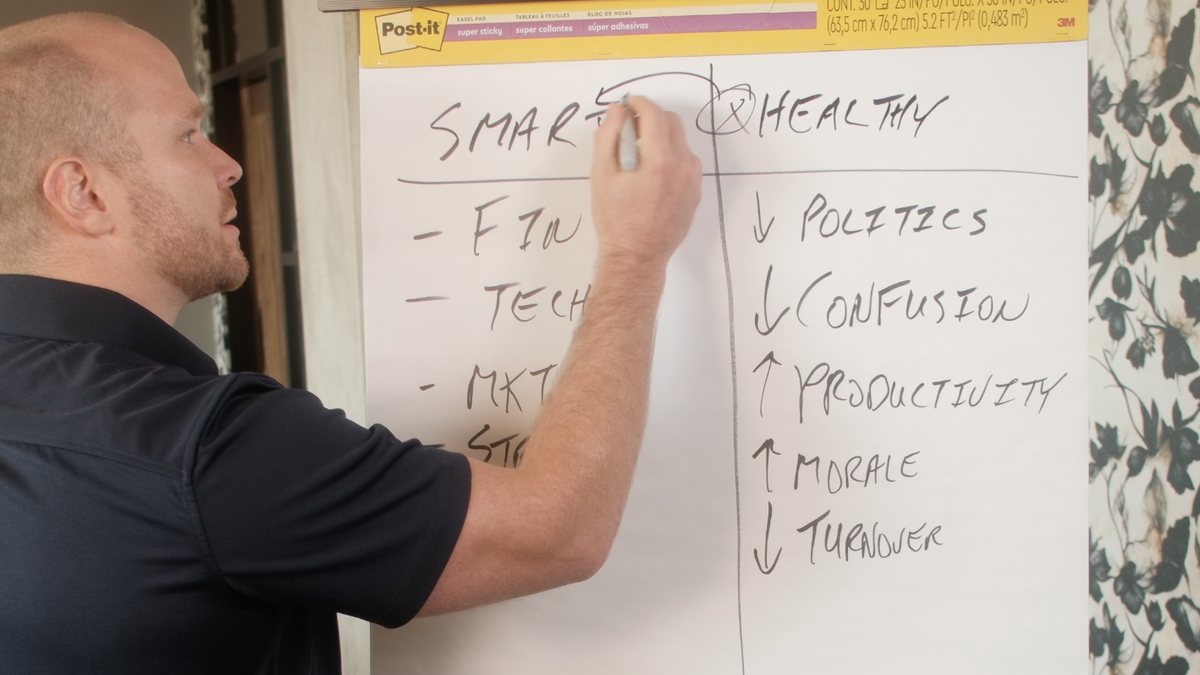
Smart is the decision sciences. Finance. Technology. Marketing. Strategy.
It’s also just the substance of your day to day. If you’re in retail, smart looks like shelf placement, product categories, pricing strategy. Every industry has its own version.
This is where leaders spend something like ninety percent of our time talking about our work. And that makes sense. It’s what we were trained in, it’s what the board asks about, and it’s the part where you can tell you moved something.
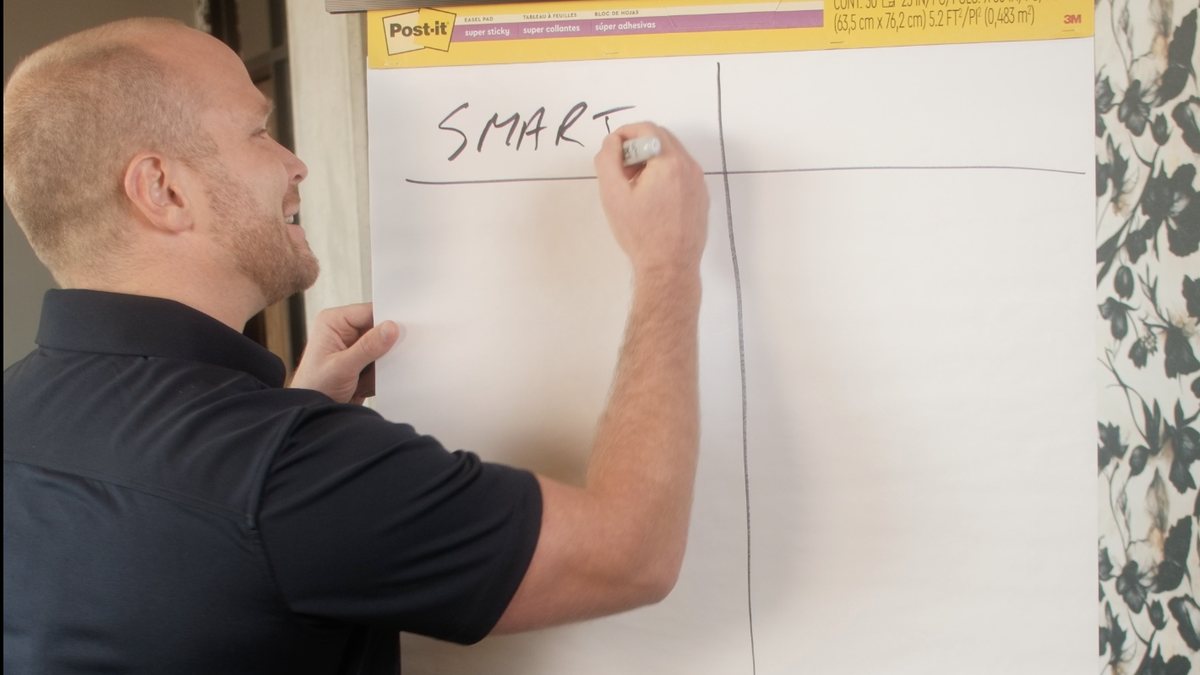
The second thing: be healthy
Healthy is the untapped competitive advantage. Organizations don’t focus on it nearly enough.
And healthy organizations really only do a few things.
They minimize politics
There are a lot of ways to think about politics. Interoffice drama. People advancing their own agenda, whether that’s titles or promotions or protecting their own department. That last one is interesting, because it can look like someone taking care of their people when it’s actually self-interest wearing a nicer coat.
But here’s the definition I keep coming back to:
Politics is people changing what they say based on who’s in the room.
When you frame it that way, you realize most politics doesn’t look like Suits. It isn’t sharp-elbowed people chasing their name on the wall.
In my experience, it’s usually well-meaning people trying to be nice. They don’t want to offend the person across the table, so they hold back. They don’t say what they actually think.
And that is every bit as dangerous as the television version. Maybe more so, because nobody recognizes it as a problem. It just looks like a pleasant meeting.
They minimize confusion
Specifically, confusion about the big things.
Why do we exist? How do we behave — what are our actual core values? What’s my job around here? Where are we going? Who’s responsible for what?
These are simple questions. They’re also the ones organizations are most confused about.
What tends to happen is we go create clarity on the less obvious things instead. We build out the peripheral stuff, document the edge cases, and unintentionally generate more confusion in the process.
Why “minimize” and not “eliminate”
You’ll notice I keep saying minimize. That’s deliberate. It’s impossible to have no politics and no confusion. We’re human, and this is part of being human.
The goal isn’t a perfect organization. The goal is less of it than you have now.
What you get for it
When you minimize those two things, three things follow.
Productivity goes up, because people aren’t spending their energy navigating drama and they know what they’re actually responsible for.
Morale goes up.
And turnover goes down. Turnover of your best people, specifically. If you’ve hired someone who doesn’t fit, you actually want to turn them over quickly. It’s the ones who resonate with the culture you want to keep.
It works as a cycle in both directions. Bring in a misfit and politics increases, because they don’t feel like they belong. Confusion follows. Productivity drops. Run it the other way and the whole thing compounds in your favor.
A word about morale and pay
When morale is low or turnover is high, the first thing I hear from leaders is that we’ve got to pay people more.
There’s some truth in that. People need to take care of their families and cover their day to day.
But past that point, the real differentiator usually isn’t compensation. It’s whether I have to deal with a bunch of crap to do my job, and whether I actually know what I’m responsible for. When people can do meaningful work and see that it makes a difference, morale rises on its own.
Without dry cleaning. Without nap pods. Without any of the gimmicks employers are throwing at people right now.
Health multiplies smart
I rarely sit with a team and think, these people are too dumb to be successful. That’s almost never the issue.
The issue is that this is the area where we don’t slow down enough to actually work through anything. Instead we go build another spreadsheet, or another deck. It’s almost funny when you notice it — the amount of time an executive team will spend arguing about font colors and font sizes while the actual problem sits there unnamed.
If we spend just enough time on health, it becomes a multiplier on smarts.
I rarely see smart organizations get healthier without deliberately deciding to. But I almost always see healthy organizations get smarter, because they’re doing the work to clear the obstacles in front of them.
So it should be a no-brainer. Which raises the obvious question.
Why do we stay stuck on smart?
Three reasons, and I’ve watched all three play out repeatedly.
Sophistication. We assume hard problems need complex solutions, when most of the hard problems here have simple answers.
Adrenaline. It shows up as busyness. I don’t have time to slow down for this. But if we don’t take care of it, it takes care of us.
Measurement. Smart is easy to measure. Health is harder to be confident about, and that discomfort keeps most teams on the side of the ledger they can put a number on.
Each of those deserves more than a paragraph. I went through all three in detail here: Why We Stay Stuck on Smart.
None of this requires a new strategy or a reorganization. It requires a leadership team willing to be slightly uncomfortable, on purpose, on a regular basis.
That’s harder than it sounds. It’s also the whole thing.

I help executives and their teams build clarity and cohesion, focusing on behaviors over systems.
Free Consulting CallMore concepts
The Four Types of Meetings
Meetings aren't bad. They're boring. That's a different problem, and it's fixable.
Read more →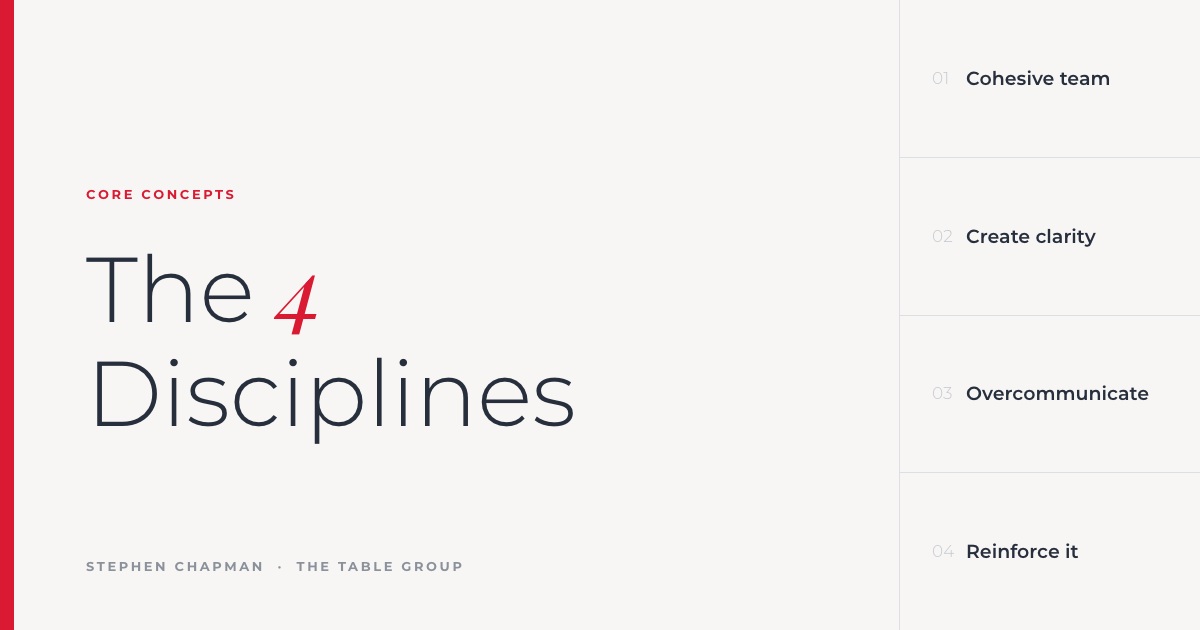
The 4 Disciplines
How organizations get healthy — and the subtle traps that ruin it.
Read more →
Why We Stay Stuck on Smart
Three biases that cause leaders to sabotage their own performance and cultures.
Read more →