
The Four Types of Meetings
Meetings aren't bad. They're boring. That's a different problem, and it's fixable.
I want to talk to you about meetings.
I know. Nobody wants to talk about meetings. Our entire working culture is organised around avoiding them — how do we escape the meeting that could have been an email, that could have been a text message instead of an email.
When I’m with a team and this topic comes up, there are eye rolls the moment I start. And there’s always one person in the room, usually the one nobody’s especially fond of, who says “I love meetings.” Sure you do, buddy.
We’re trying to change how people think about this. Because the prevailing belief is that meetings are bad, and I don’t think that’s the problem.
Meetings aren’t bad. They’re boring. That’s a different problem.
Why they’re boring
Two reasons: they lack context, and they lack conflict.
Context. There’s a phenomenon we call meeting stew. You take the big, hairy strategic topics and mix them with what we’re doing about lunch, and everything in between, all braided into one session. We usually do it weekly and call it the staff meeting.
That meeting is probably the worst one on the calendar, because it has no coherent context. There’s no answer to what conversation this is supposed to be.
Conflict. There isn’t enough of it, which sounds like a strange complaint until you define the term. I mean productive ideological disagreement — getting the ideas, perspectives and opinions genuinely on the table, where people aren’t holding back and aren’t worried about offending each other.
Think about any meeting you’ve been in where real conflict surfaced. It’s a head-turner. People are checked out, disengaged, and then somebody says something and the whole room goes what did they just say? Engagement spikes instantly.
That’s not an accident. It’s how movies are built. It’s how every story is told. Tension that needs resolving is what draws human beings in.
So if your meetings aren’t resolving some problem, some tension, some disagreement, they’re probably not productive. They’re informational. And informational meetings are close to pointless.
The context problem has a structural fix. There are four categories of meeting, and teams need to get good at all four.
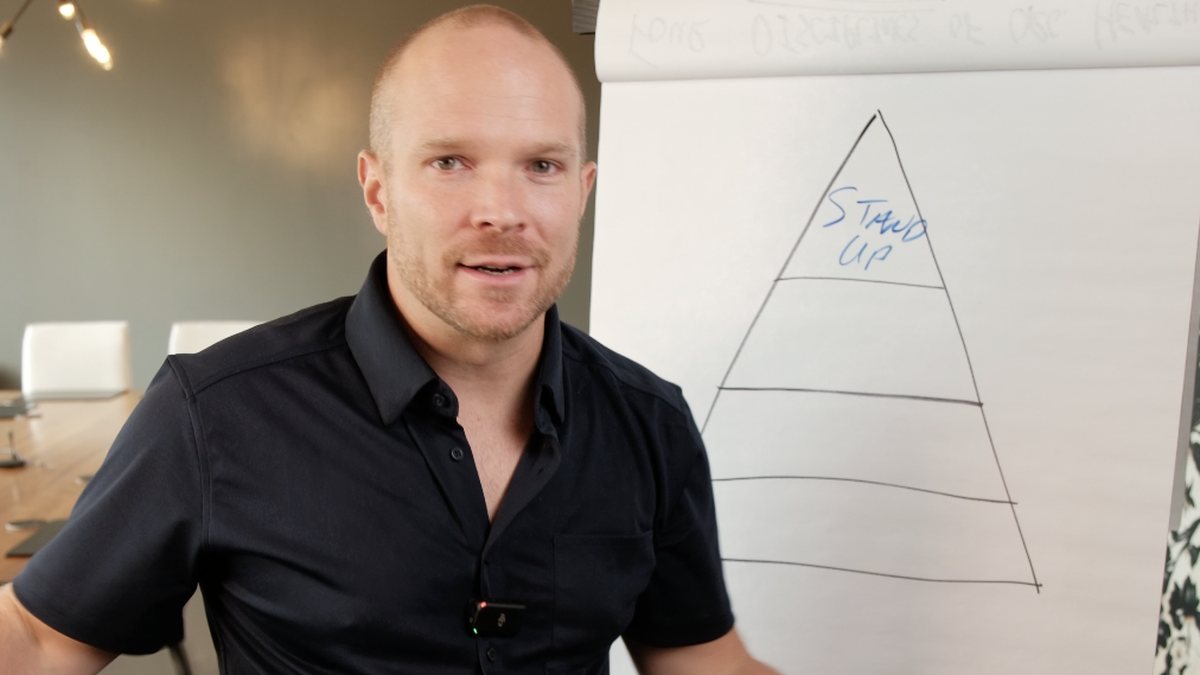
1. The stand-up
Five to ten minutes. Teams routinely stretch this into fifteen, twenty, thirty — which misses the spirit of it entirely.
My favourite way to think about this one isn’t from work at all. At home, my wife and I do it organically. No set time, no agenda, because it’s just the two of us. How’s your day going? What have you got on? And inevitably — oh, by the way, I can’t pick the kids up today, can you? Or I won’t have time for dinner, can you handle it?
A quick moment to connect, sync up, and handle the tactics of that day.
Businesses need exactly that. When a team feels disconnected, this is the single meeting that would help most — and it’s the most resisted of the four.
2. The tactical
The one everyone recognises. Instead of “weekly staff,” we call it the tactical, because the spirit of it is the tactics for this week.
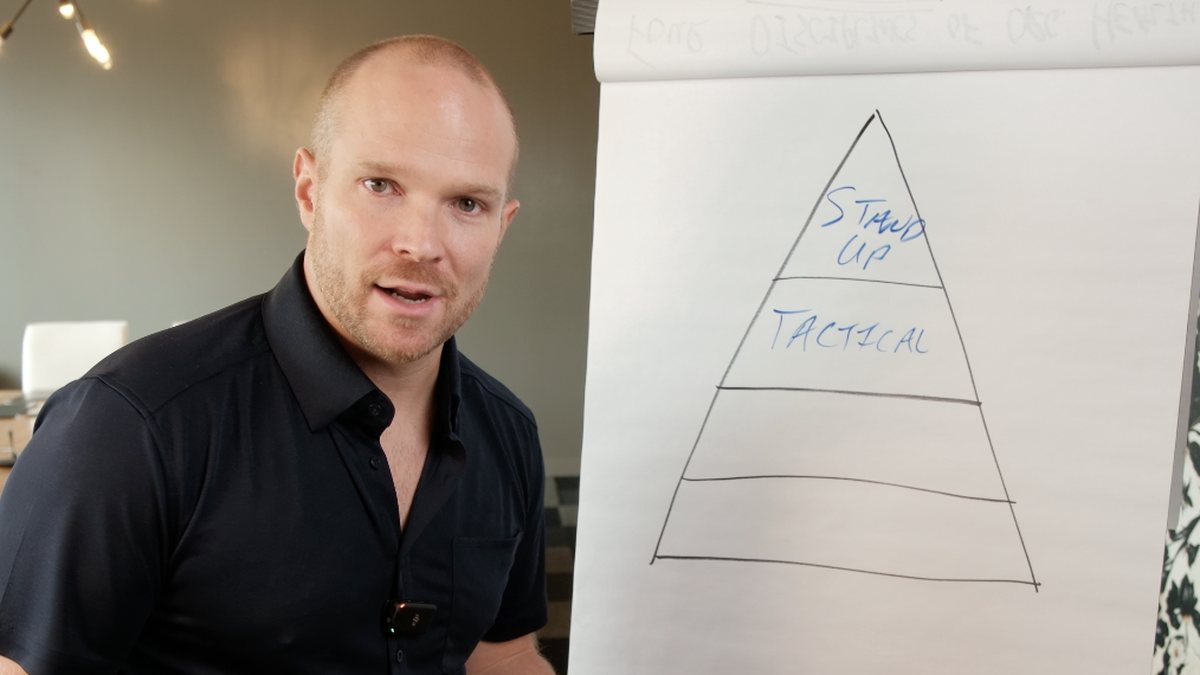
Meetings go wrong here when we try to think a quarter out, or into next year, or work through some enormous problem. That takes more conversation and more time than you have. If you’re meeting for sixty to ninety minutes once a week with the whole team, there’s no room to go to that depth.
Those topics need their own meeting.
The tactical is: we know our goals, we know what has to get done — what do we need to do this week to make progress?
3. The topical
As things surface in the weekly rhythm, you flag the ones that need real time. That’s a topical, and it comes in two flavours.
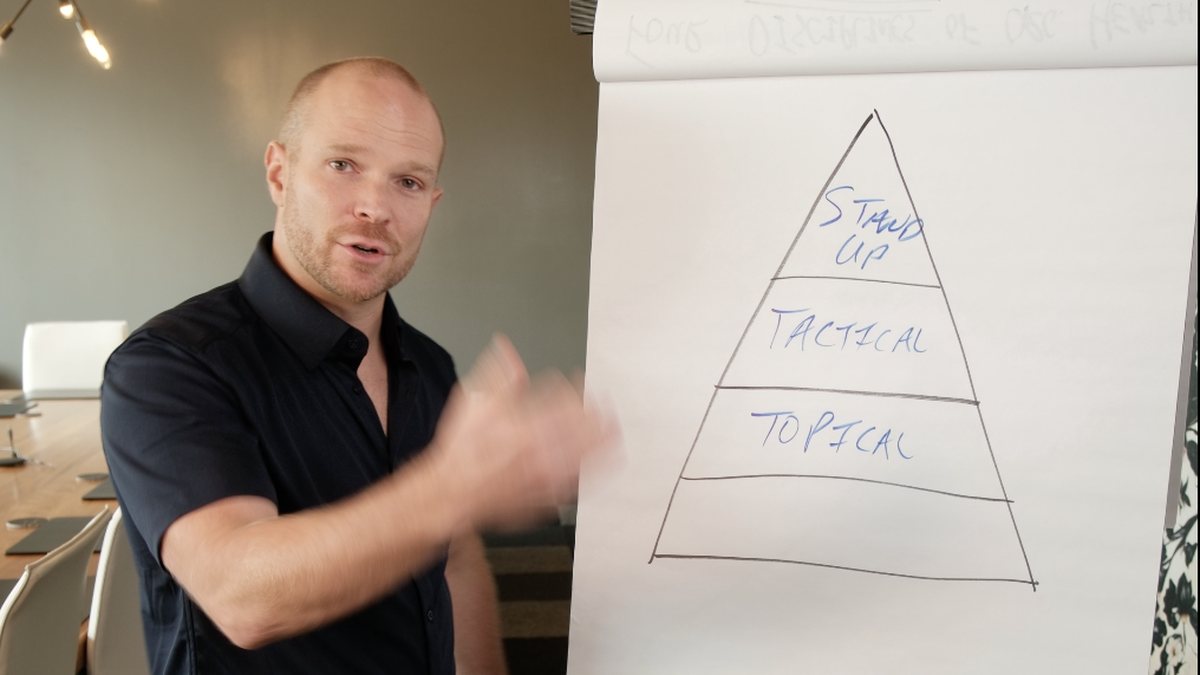
Strategic. Big problems, big opportunities, things that can’t wait until the next offsite — we need to deal with this in the next couple of weeks. Budget an hour to two per topic.
When we get a large block on the calendar, two to four hours together as a team, it feels so precious that we’re tempted to cram in a pile of topics. That defeats the entire purpose. The point is going deep on one or two.
Progressive. You might call it a working session. The temptation here is to pull up a spreadsheet or a deck and start building the thing.
Resist it. Progressive conversations should focus on the critical conversations you need to have, so you can go build the document outside the meeting.
Meetings are for conversation, not for document building.
4. The offsite
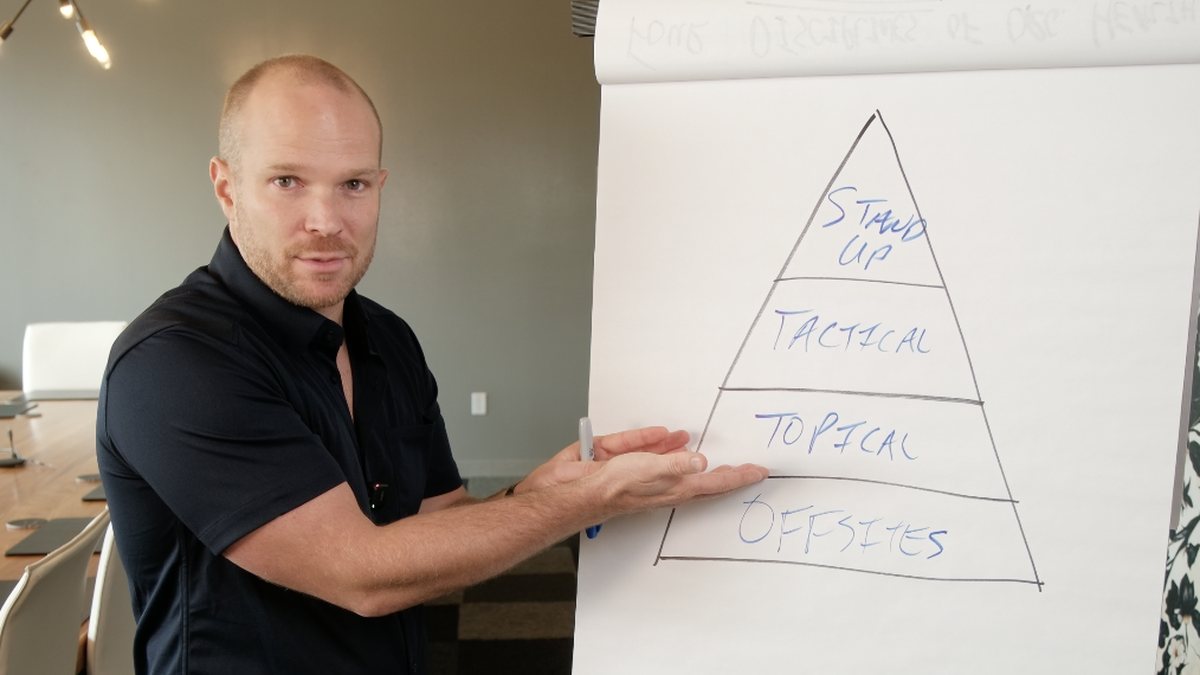
There’s some overlap with strategic topicals, but a good offsite isn’t about diving into documents or details.
It’s the rare opportunity to step back as a leadership team and get to the thirty-thousand-foot view. Out of the day-to-day. How’s our team doing? How are we showing up?
It’s the time to reconnect and ground yourselves. To create the clarity there’s never room for in the weekly rhythm. To work out how you’ll communicate the big decisions to your people and bring them along. And to evaluate how your other meetings are going, how the business is performing, and what needs to change at a high level.
The discipline is staying out of the tactics.
Conflict is the ingredient in all four
I moved past this quickly, but it’s the magic in every one of these.
In the daily stand-up, conflict is simple and quick — resolved on the spot.
In the tactical, most disagreements resolve inside ten minutes. And that gives you a useful rule of thumb: if you’re more than ten minutes into one topic, it probably isn’t a tactical topic. It needs to become a topical, because it requires time and the full range of perspectives.
And the offsite is where the best conflict should happen, because it’s the only place you’ve got the space to slow down and have the right conversation properly.

I help executives and their teams build clarity and cohesion, focusing on behaviors over systems.
Free Consulting CallMore concepts
The 4 Disciplines
How organizations get healthy — and the subtle traps that ruin it.
Read more →
Why We Stay Stuck on Smart
Three biases that cause leaders to sabotage their own performance and cultures.
Read more →
Smart vs. Healthy
Organizations need two things to succeed. Most leaders spend 90% of their time on the first one.
Read more →